Vegan Eating for Diabetes & Hypertension: A Data-Driven Guide Using Veggie Saigon's Menu
Important note: This article provides general nutritional information and does not constitute medical advice. Always consult your physician or dietitian before making dietary changes for health conditions.
The evidence base for plant-based diets and metabolic health is substantial. A 2019 meta-analysis in JAMA Internal Medicine found that plant-based dietary patterns were associated with a 23% reduced risk of type 2 diabetes. For blood pressure, the DASH diet (Dietary Approaches to Stop Hypertension) is essentially a plant-forward eating pattern — and its blood pressure reductions are among the most clinically significant of any dietary intervention.
Veggie Saigon's menu, with full carbohydrate and fiber data on every item, allows people managing diabetes and hypertension to make precisely informed choices.
🩺 For Diabetes Management: Low Glycemic Load, High Fiber
The key metric is not just total carbohydrates — it's the glycemic load: carbs multiplied by the rate at which they raise blood sugar. Fiber dramatically reduces glycemic load. So do protein and fat. Here are the best choices:
Đậu Hũ Sốt Cà — Carbs 13g, Fiber 3g, Protein 13g, 180 kcal. The lowest carbohydrate main dish on the menu. The tomato sauce provides lycopene (linked to reduced HbA1c in diabetics) and natural acidity that further slows glucose absorption. Pair with Canh Cải Ngọt (Carbs 8g, Fiber 3g) for a complete meal at only 240 kcal and 21g net carbs.
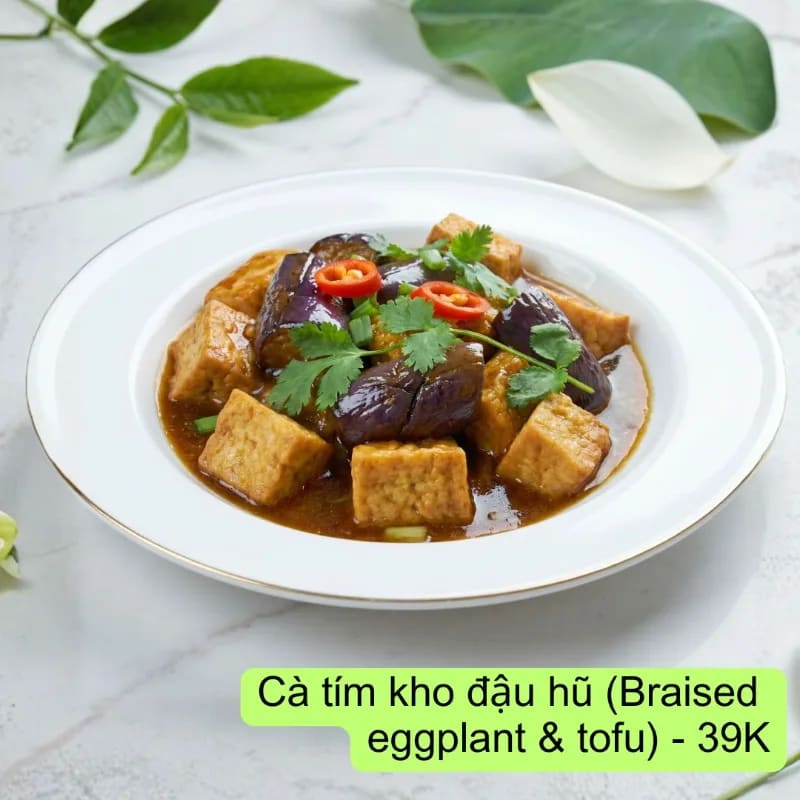
Cà Tím Kho Đậu Hũ — Carbs 15g, Fiber 5g, 185 kcal. Eggplant contains chlorogenic acid, which specifically inhibits alpha-glucosidase — the enzyme that breaks down dietary starch into glucose. This is a pharmacologically meaningful effect: eating eggplant literally slows the rate at which carbohydrates from your meal enter your bloodstream. Combined with Protein 12g and Fiber 5g, the glycemic impact of this dish is exceptionally low.
Gỏi Cuốn Đậu Hũ — Carbs 35g, Fiber 4g, Protein 10g, 230 kcal. Fresh spring rolls have a lower glycemic index than any cooked noodle dish because rice paper is not heat-processed the same way as cooked rice. The raw vegetables add further fiber. A serving of two to three rolls is a complete light meal with manageable carbohydrate load.
Trà La Hán Quả — Carbs 4g, 15 kcal. Monk fruit's mogrosides are not metabolised by the body — they pass through the gut without raising blood glucose. This is the only sweetened drink at Veggie Saigon that is genuinely safe for people with diabetes. It provides real sweetness satisfaction with near-zero glycemic impact.
❤️ For Blood Pressure Management: Potassium, Magnesium, Low Sodium
The DASH diet works primarily by increasing potassium (which counteracts sodium's blood pressure-raising effect) and magnesium (which relaxes blood vessel walls). Vegetables, legumes and whole grains are the richest sources.
Canh Rong Biển Thập Cẩm — 90 kcal, Protein 7g, Fiber 4g, 39,000₫. Seaweed is among the highest potassium-density foods in existence. The vegetable broth (made without added salt at Veggie Saigon) provides minerals without excess sodium. This soup should be a weekly staple for anyone managing hypertension.
Sinh Tố Chuối Yến Mạch — 260 kcal, Protein 6g, Fiber 5g. Banana is one of the richest potassium sources in the plant kingdom (422mg per medium banana). Beta-glucan in oats reduces LDL cholesterol — a key risk factor for hypertension-related cardiovascular events. This smoothie is a blood pressure intervention disguised as breakfast.
Trà Atiso Đỏ — 24 kcal, 20,000₫. Multiple randomised controlled trials have found hibiscus tea reduces systolic blood pressure by 6–10 mmHg — comparable to some pharmaceutical interventions. The mechanism is anthocyanin-mediated inhibition of ACE (angiotensin-converting enzyme), the same pathway targeted by a class of blood pressure medications. At 20,000₫, this is the most cost-effective blood pressure intervention in Da Nang.
Cơm Lứt Cà Tím Kho Gừng — 340 kcal, Protein 8g, Fiber 7g — 49,000₫. Brown rice has a significantly lower glycemic index than white rice (50 vs 72) and provides magnesium. The ginger contains gingerols that have demonstrated ACE-inhibitory effects in research. The eggplant adds chlorogenic acid. This dish is a functional food for metabolic health — three active compounds working together.
⚠️ Dishes to Approach Carefully
For blood sugar management: the Sichuan dishes (Tứ Xuyên) contain high-sodium sauce — not ideal for daily consumption with hypertension. Limit fried items (khoai tây chiên, chả giò) to occasional treats. When ordering soups, be aware that soy sauce (nước tương) contributes to sodium load — ask for reduced sauce if needed.
For both conditions: the menu's full ingredient disclosure allows you to identify soy sauce (sodium), chili (may affect some individuals) and fermented ingredients (some people with diabetes find these affect glycemic response). This transparency is not available at most Vietnamese restaurants. At Veggie Saigon, it's standard.
Open daily 10:00–21:00 · 76 Thủ Khoa Huân, Sơn Trà, Da Nang · Full ingredient lists on all menu items