Vegan Fried Rice: The Science of Separated Grains and the Maillard Reaction
Fried rice appears in every Asian cuisine — Korea to India, Japan to Vietnam. But genuinely great fried rice — separated grains, dry, smoky — requires understanding food science, not just recipes.
Why Day-Old Rice Is Essential
Freshly cooked rice contains high water content and starch in gelatinized state — when heated, grains clump together. Overnight refrigerated rice allows starch retrogradation — starch chains rearrange into crystalline structures, making grains more separate and dry. This is the physical foundation of great fried rice.
The Maillard Reaction — The Real Flavor of Fried Rice
The Maillard reaction occurs when amino acids and sugars react above 140°C, creating hundreds of new flavor compounds. This is why restaurant high-flame fried rice tastes better than home electric stove fried rice — higher temperature = stronger Maillard reaction = more complex flavor.
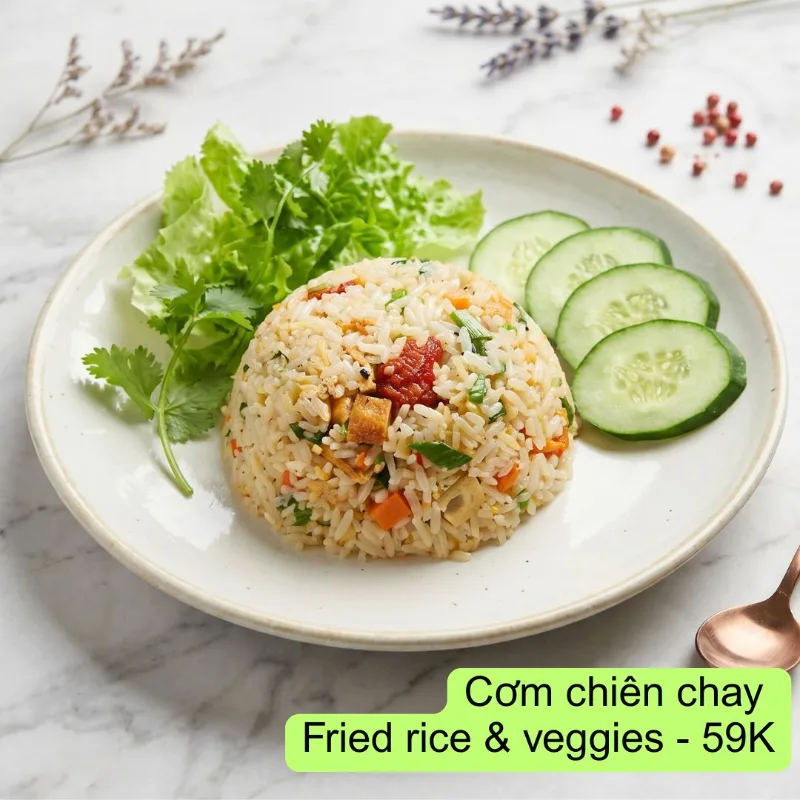
Veggie Saigon Vegan Fried Rice
Protein comes from scrambled tofu (crumbled tofu stir-fried with turmeric and black salt — creating yellow color and egg-like flavor), minced shiitake mushrooms (umami), and green beans. Tamari soy sauce and sesame oil are added at the very end, just before turning off heat — to preserve aroma that would otherwise volatilize.
The best fried rice is not the one with the most eggs — it is the one with the highest heat and the freshest ingredients.
Order at veggiesaigon.com/order