Vegan Da Nang for Korean and Japanese Travelers: Familiar Flavors, New Discovery
🌏 Da Nang receives millions of Korean and Japanese tourists annually — and the number grows every year. Both countries have strong Buddhist traditions and well-developed vegan food cultures. When these travelers discover Vietnamese vegan food, the reaction is often a pleasant surprise: the flavors are familiar, the quality is high, and the prices are extraordinary.
🇰🇷 For Korean Travelers (한국 여행객을 위해)
Korean Buddhist cuisine (사찰 음식, sachal eumsik) is one of the world's most sophisticated vegan food traditions. Vietnamese vegan food shares much with it: fermented flavors (Vietnam's mắm echoes Korea's doenjang and ganjang), tofu as a central protein, broth as a flavor base, and the importance of texture contrast.
Top picks for Korean travelers:
🥢 Mì Tiềm Táo Đỏ (Jujube Noodle Soup) — the concept of táo đỏ (jujube/대추) as medicinal food is deeply familiar to Korean food culture. The herbal broth will feel immediately comfortable.
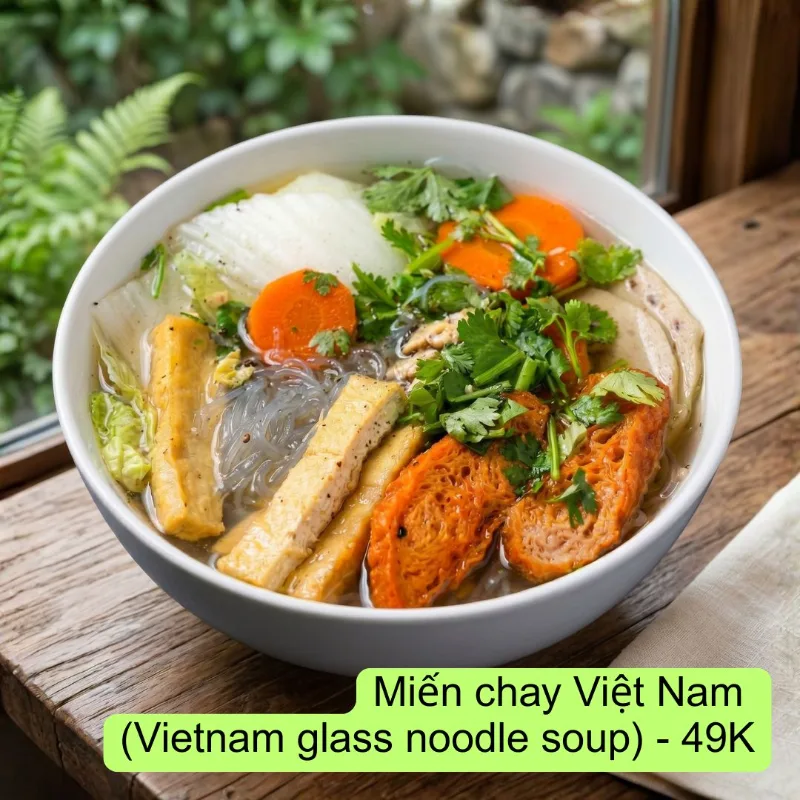
🥢 Miến Chay (Glass Noodle Soup) — glass noodles (당면, dangmyeon) are a beloved Korean ingredient. The Vietnamese mung bean version has a similarly delicate quality.
🥢 Buddha Bowl of Brown Rice — brown rice (현미, hyeonmi) is increasingly preferred in Korean health-conscious circles. A bowl with tofu and vegetables mirrors Korean home cooking.
🥢 Vegan Shumai — mandu (만두) culture means dumplings feel like home.
🇯🇵 For Japanese Travelers (日本人旅行者へ)
Japan's shōjin ryōri (精進料理) — Buddhist temple cuisine — is perhaps the world's most refined vegan food tradition, prizing simplicity, seasonal ingredients, and careful preparation. Vietnamese vegan food shares shōjin's reverence for fresh ingredients, tofu, mushrooms, and careful broths.
Top picks for Japanese travelers:
🥢 Vegan Pho — the slow-simmered aromatics-based broth resonates with Japanese appreciation for dashi traditions. Both are about extracting maximum flavor through patience.
🥢 Hong Kong Soft Tofu (Đậu hũ non kiểu Hong Kong) — silken tofu preparations are deeply familiar to Japanese food culture. The smooth texture and subtle seasoning mirrors beloved Japanese tofu dishes.
🥢 Vegan Shumai — the dumpling tradition crossed from China to Japan as gyoza. Vietnamese shumai bridges these traditions.
🥢 Turmeric Vermicelli Bowl — the golden color and clean flavor profile appeal to Japanese aesthetic sensibilities around food presentation.
📸 Most Photogenic Dishes
Both Korean and Japanese food culture place high value on visual presentation (인스타그램 / インスタグラム). Our most camera-worthy: Turmeric Mixed Rice Noodle (golden, vivid), Dragon Fruit Banana Smoothie (deep pink), any noodle soup with a generous herb plate.
🌏 Food is the most direct path to understanding another culture. Vietnamese vegan food — rooted in the same Buddhist traditions that shaped Korean and Japanese cuisines — offers a profound shared experience disguised as lunch. 음식은 문화를 이해하는 가장 직접적인 길입니다. 食べ物は文化を理解する最も直接的な方法です。